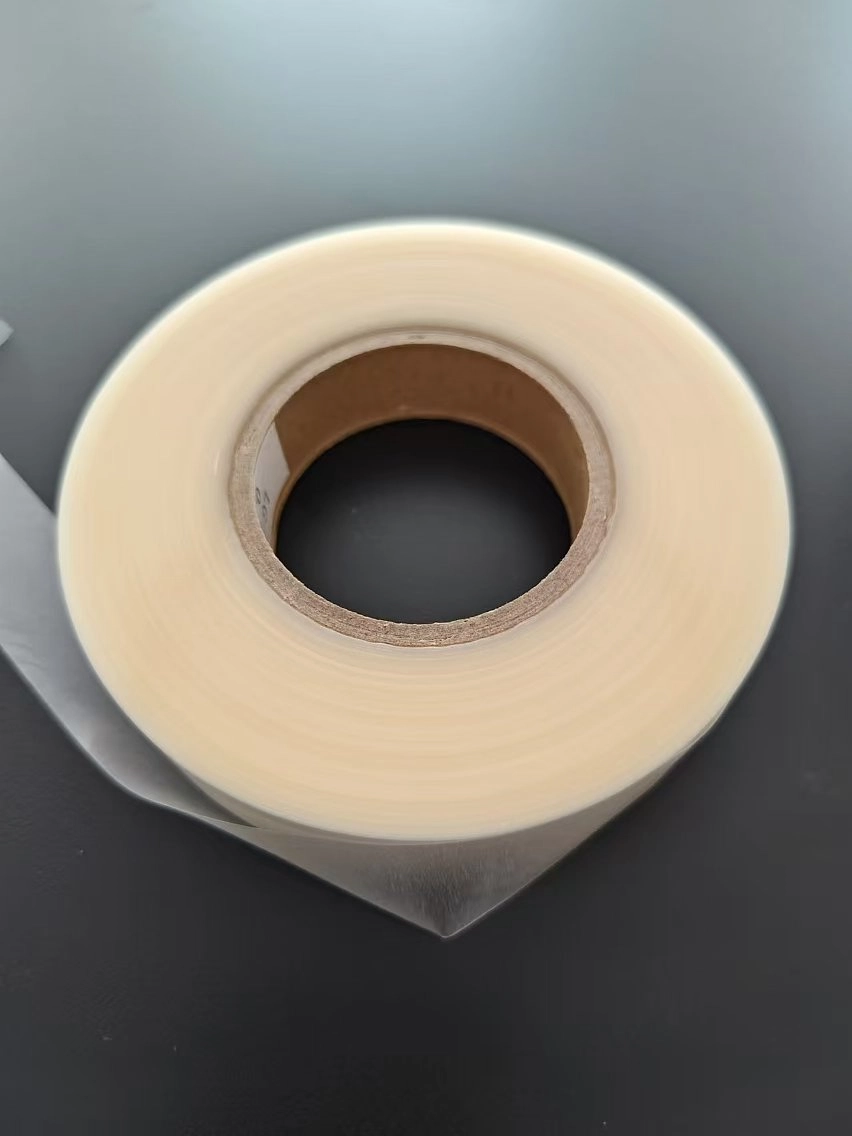
두께가 다른 열융착 필름의 차이점은 무엇인가요?
Release time: 2026-03-18
핫멜트 접착 필름 range in thickness from 0.02 mm to 0.4 mm; this dimension is a critical factor influencing bonding strength, tactile feel, cost, and suitability for specific applications. Thin films prioritize softness and transparency, making them ideal for garment lamination, whereas thick films emphasize robustness and durability, rendering them suitable for heavy-duty industrial use. Selecting the wrong thickness can easily lead to bonding failure, an undesirable stiffening of the material’s texture, or unnecessary cost wastage. Understanding these differences in thickness enables users to precisely match materials with manufacturing processes, thereby avoiding a trial-and-error approach. This article provides a detailed breakdown of common specifications, the impact of thickness on performance, typical application scenarios, and selection guidelines, empowering you to quickly identify the right hot melt adhesive film and boost your production efficiency.
목차
What Are the Common Thickness Specifications for Hot Melt Adhesive Films?
The thickness of TPU 열용융 접착 필름 are typically measured in millimeters (mm), micrometers (µm), or “mils” (where 1 mm = 100 mils). Common specifications include 0.03 mm (3 mils), 0.05 mm (5 mils), 0.10 mm (10 mils), 0.15 mm, and thicknesses ranging from 0.20 mm to 0.30 mm. For PES-based films, the minimum thickness is generally no less than 0.05 mm; TPU-based films can be as thin as 0.03 mm but typically have an upper limit of 0.10 mm; while EVA-based films cover a range from 0.03 mm to 0.3 mm. The specific type of adhesive and the manufacturing process used (e.g., blown film extrusion typically has an upper limit of 0.10 mm, whereas coating processes can achieve a lower limit of 0.03 mm) ultimately determine the available range of thicknesses.
How Does Varying Thickness Affect Bonding Performance?
Thickness directly determines the quantity of adhesive applied and its penetration depth. Thin films (e.g., 0.05 mm) contain a smaller volume of adhesive and penetrate less deeply into the substrate; they are best suited for lightweight materials, offering a bonding strength of approximately 0.3 MPa. Conversely, thick films (e.g., 0.25 mm) create a thicker adhesive layer, achieving a bonding strength of up to 0.46 MPa with superior peel resistance; however, they are more prone to generating internal stress within the bonded assembly. For porous fabrics, using a thin film helps prevent the material from becoming stiff or rigid; for footwear components, using a thick film ensures long-lasting adhesion. Generally, adhesive strength increases linearly as the film thickness increases; however, using a film that is excessively thick may lead to adhesive flow-out or material deformation during the bonding process.
Which Application Scenarios Are Best Suited for Different Film Thicknesses?
Thin films (0.02–0.08 mm) are utilized for garment shaping and lamination, preserving the fabric’s softness and breathability without compromising its tactile feel. Medium-thickness films (0.10–0.15 mm) are suitable for footwear, headwear, and luggage applications, striking a balance between strength and flexibility. Thick films (0.20 mm and above) are designed for heavy-duty applications—such as automotive interiors and furniture—ensuring exceptional durability. The textile industry typically favors thinner films to achieve a lightweight profile, whereas industrial lamination applications tend to opt for thicker films to ensure structural stability.
How do you select the appropriate film thickness based on your specific requirements?
First, evaluate the materials to be bonded: for fabrics, select a thin film to preserve the tactile feel; for materials like leather or metal, choose a thicker film to enhance bonding strength. Next, test the process parameters—typically involving temperatures of 120–160°C and pressures of 10–20 psi—to ensure uniform adhesive penetration. Finally, consider cost-effectiveness: thinner films consume less adhesive, potentially yielding 5–10% in material savings; however, if the required bonding strength cannot be achieved with a thin film, a thicker alternative may be necessary. For small-batch production, conduct preliminary trials using samples; for large-scale production, fine-tune the process parameters using professional lamination machinery.
Hot melt adhesive films of varying thicknesses each possess distinct advantages; selecting the appropriate thickness can significantly optimize bonding performance, reduce production costs, and effectively address a diverse range of requirements—from lightweight apparel to heavy-duty furniture. Through preliminary sampling and process adjustments, you can easily master this critical technical aspect. Moving forward, high-performance adhesive films featuring optimized thickness ratios are poised to further expand the boundaries of application possibilities. 안후이 토미스 specializes in the R&D of hot melt adhesive films, offering customized thickness options and expert technical consultation to help you upgrade your bonding processes. We invite you to contact us for professional guidance on product selection.