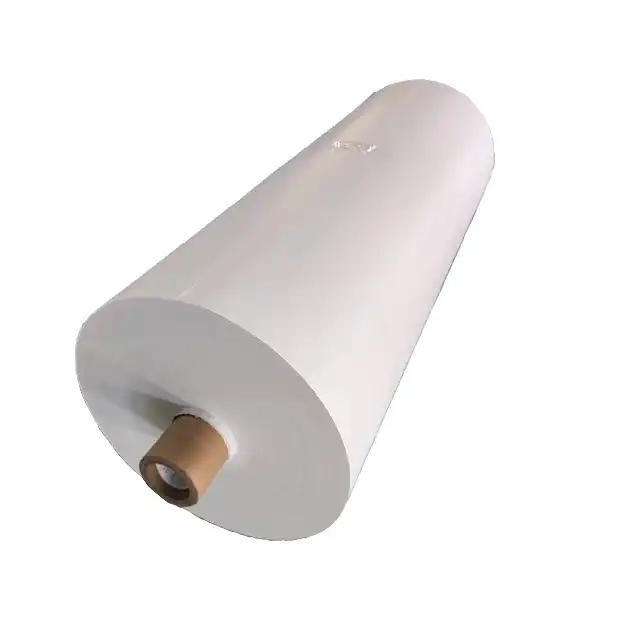


What are the applications of hot-melt adhesive webs in the automotive industry?
Release time: 2026-05-26
As automotive manufacturing evolves toward lightweighting, environmental sustainability, and enhanced comfort, material lamination processes are continuously upgrading. Thanks to characteristics such as uniform bonding, ease of use, and solvent-free eco-friendliness, hot-melt adhesive webs have become vital auxiliary materials in the automotive industry. They not only improve the bonding quality of interior components but also meet stringent requirements for temperature resistance, strength, and aesthetic appeal, leading to their increasingly widespread use.
Table of Contents
Why are hot-melt adhesive webs suitable for automotive interiors?
Automotive interiors demand high-performance materials that offer strong adhesion while remaining soft, lightweight, and visually appealing. Hot-melt adhesive webs can be used on components such as headliners, seats, door panels, pillars, and sun visors to securely bond materials like fabrics, leather, foam, and plastics.
Compared to traditional adhesive methods, hot-melt adhesive webs provide more uniform bonding over large areas and offer better control over appearance and tactile feel, making them ideal for continuous automotive interior production lines.
Can they be used for seats and headliners?
Yes; in fact, this is one of the most common applications for hot-melt adhesive webs. Components such as car seats, headliners, floor mats, and parcel shelves often require the lamination of multiple material layers; hot melt adhesive web form a stable bond upon heating, balancing both strength and flexibility.
Technical data indicates that the types of hot-melt adhesive webs used in automotive interiors must possess excellent high- and low-temperature resistance to withstand the diverse environmental conditions vehicles encounter.
Why are they also used for sound and heat insulation?
Beyond comfort, the automotive industry places great emphasis on NVH (Noise, Vibration, and Harshness) performance. Hot-melt adhesive webs can bond sound-insulating materials, heat shields, foam, and aluminum foil composites, helping to create stable, multi-layered structures.
This application not only enhances passenger comfort but also supports lightweight design, as the webs are particularly well-suited for bonding lightweight materials.
Are they needed for automotive filtration materials and components?
Yes. In addition to interior applications, hot-melt adhesive webs are used in the assembly and lamination of air filters, filter cartridges, wiring harnesses, cables, and various other automotive components. For automotive manufacturers, the value of these materials lies in their process stability, eco-friendliness (low VOC emissions), and suitability for mass production—making them particularly ideal for replacing certain traditional glues and solvent-based adhesives.
Hot-melt adhesive webs play a vital role in the automotive industry by bonding materials, enhancing efficiency, and optimizing performance; they offer significant application potential. They are utilized in a wide range of areas, including seats, headliners, door panels, sound and thermal insulation layers, and certain exterior components. As the automotive industry continues to raise its standards for environmental sustainability and quality, hot melt web will find their way into an even broader range of applications. Anhui Tomis remains committed to monitoring developments in this sector and providing the industry with superior material solutions.